About

The consultancy born at the intersection of behavioral economics and human experience.

RENÉ STUDIO

The CX design platform we built from a decade of client work.

Open rene.cx ↗
NOW HIRING

Join a team reshaping how the world experiences brands.

View open roles →

COMPANY

GROW WITH US

CONNECT

Services

Comprehensive CX and management consulting for enterprise brands.

RENÉ STUDIO

Every engagement, mapped and scored in one AI workspace.

Open rene.cx ↗
ALL SERVICES

Explore the full range of CX & management consulting services.

Browse all services →

CORE

SPECIALIST

Solutions

Structured solutions that turn CX ambition into measurable outcomes.

RENÉ STUDIO

Map, score and fix the journeys we redesign, with AI.

Open rene.cx ↗
ALL SOLUTIONS

Explore every CX solution we offer.

Browse solutions →

STRATEGY & GOVERNANCE

DESIGN & DELIVERY

CULTURE & EXPERIENCE

Industries

A decade of CX transformation across the region's defining sectors.

RENÉ STUDIO

Sector-ready journeys, scored by AI in minutes.

Open rene.cx ↗
ALL INDUSTRIES

See how we work across every sector.

Browse industries →

BUILT ENVIRONMENT

FINANCE & TECH

PEOPLE & MOBILITY

Products

Proprietary tools, platforms, and AI that power CX transformation.

RENÉ STUDIO

Design, score and fix customer journeys with AI.

Open rene.cx ↗
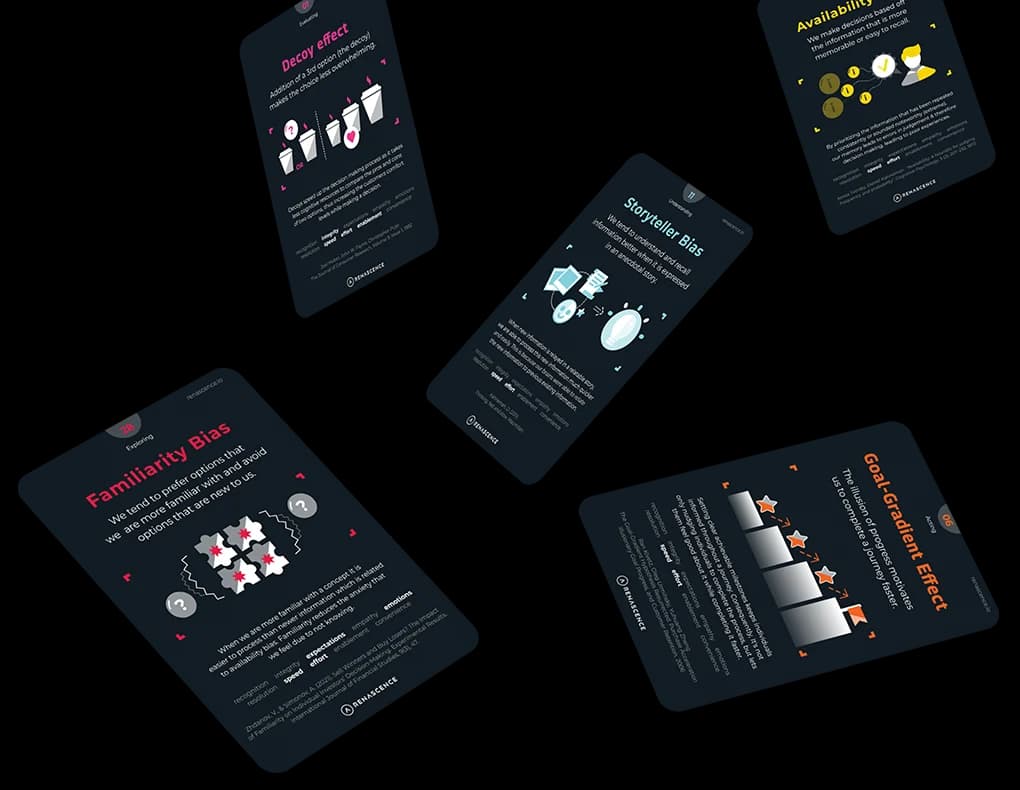
REBELDECK A · 36 FORCES

The forces that shape how humans experience the world.

Explore REBEL Reveal →
ALL PRODUCTS

Explore the full Renascence product ecosystem.

Browse products →

AI & TECHNOLOGY

LEARNING & GAMES

PLATFORMS & TOOLS

CX TOOLKIT

Opinion

Insights, research, and conversations at the frontier of CX.

RENÉ STUDIO

Turn what you read into a journey you can score.

Open rene.cx ↗
ReadExperience JournalArticles & research on CX, behavior, and transformation.Watch & listenExperience LoomOur video podcast on CX & behavior.CuratedCX NewsIndustry news that matters in CX, minus the noise.

Latest articles

Latest episodes

Latest news

Hub

Free tools, templates, and resources to advance your CX practice.

RENÉ STUDIO

Design, score and fix customer journeys with AI.

Open rene.cx ↗
THE MANIFESTOBurn the Deck.
Ten Virtues. Zero Excuses.Start reading →
THE HUB

Every free tool, template and resource in one place.

Visit the Hub →

AI TOOLS

FREE TOOLS

LEARNING

CULTURE

Customer Service · 1 October 2026

California mandates easy human escalation from AI chatbots

California now requires businesses to give consumers a clear, accessible way to reach a live human agent instead of being trapped in AI chatbot or IVR loops.

Newsdesk
Curated briefing · 2 min read

What happened

California has introduced a requirement for businesses to give consumers a clear, accessible route to a live human agent, rather than leaving them trapped in AI chatbot menus or automated phone loops. The move targets a common frustration: customer-facing systems designed in ways that make escalation to a person difficult or deliberately obscured.

The requirement applies to companies operating in the state and effectively sets a baseline expectation that automated service channels cannot be the only option available to consumers seeking support.

Why it matters

This is a regulatory signal that the design of automated service journeys is now a compliance issue, not just a customer experience preference. As businesses have leaned on AI-driven self-service to cut costs and handle volume, the path back to a human has often been buried deliberately or through poor design — a pattern regulators are beginning to treat as a consumer protection gap rather than an acceptable trade-off.

For leaders building or scaling AI-driven service, the practical implication is that chatbot and IVR deployments now need a transparent, low-friction escalation mechanism built in from the outset, not bolted on reactively. This reframes "containment rate" — long treated as a success metric for automation — as something that must be balanced against a demonstrable, easy exit to a live agent.

The Renascence take

Much of the commentary around this kind of rule focuses on compliance risk. The more interesting story is behavioral: deliberately or not, many automated systems have been engineered around friction, relying on consumer fatigue to suppress escalation and keep cost-per-contact low. Regulation is now catching up to a design pattern the industry has quietly normalised.

The real lesson here isn't "make escalation legal," it's that hidden friction is a trust tax that eventually gets billed back to the brand — through regulation, churn, or both. Organisations that treat a visible, one-step path to a human as a feature rather than a leak will find AI containment rates actually hold up better, because customers no longer have to fight the system just to trust it. The operators who get ahead of this will design for voluntary self-service, not enforced self-service.

Sources

This briefing was written by our Newsdesk, synthesising reporting from the outlets below. Follow the links for the original coverage.

FAQ

Questions we get on this topic

It requires companies operating in the state to provide consumers with a clear, accessible route to a live human agent, rather than confining them to AI chatbot menus or automated phone loops.

Regulators are responding to a widespread pattern where automated service channels make escalation to a human deliberately difficult or obscured, treating this as a consumer protection issue rather than an acceptable design trade-off.

Businesses now need to build a transparent, low-friction escalation path to a human into their automated service journeys from the start, rather than adding it reactively after deployment.

According to Renascence's analysis, hidden friction in escalation paths acts as a 'trust tax' that eventually costs brands through regulation or customer churn, so a visible one-step route to a human should be treated as a feature that can improve, not undermine, automation performance.

Stay ahead of CX

Get the signal, not the noise.

The stories shaping customer experience — plus the Journal and Experience Loom — in your inbox.